Disruptive technologies have been a hot topic in recent decades, fundamentally changing how we interact with the world around us. From artificial intelligence to blockchain, these innovations are not only breaking conventional technological barriers but also creating new, previously unimaginable opportunities.
As an evolving society, we stand on the cusp of major changes that promise to enhance efficiency and convenience in various aspects of our daily lives.
Many industries are currently beginning to feel the impact of disruptive technologies, where companies must quickly adapt or risk being left behind. The global economy is also not immune to this influence; traditional business models are challenged to transform and evolve with the continuously developing wave of innovation. For business leaders and entrepreneurs, understanding and adopting disruptive technologies can be key to survival and success in the future.
Beyond their economic and industrial impact, disruptive technologies also hold immense potential to improve societal well-being and happiness. With easier access to information and better healthcare services, as well as broader educational opportunities, communities can enjoy a higher quality of life. However, alongside these benefits come new challenges that must be addressed, such as unequal access and shifts in the labor market. Therefore, it is crucial for us not only to appreciate these innovations but also to actively seek solutions to the emerging challenges.
In our ever-evolving digital era, the term “disruptive technology” often sparks lively discussions among industry players. What exactly is disruptive technology? Simply put, disruptive technology refers to innovations that fundamentally change how an industry operates, often displacing incumbents and introducing new business models. In this article, we will explore various disruptive technologies expected to transform the face of industries in the coming years.
-
Artificial Intelligence (AI) and Machine Learning
Artificial Intelligence (AI) has transformed many industries with its ability to analyze big data and make faster, more accurate decisions. Machine learning, as a subset of AI, enables systems to learn and improve their performance without human intervention.
Why is it important? Companies like Amazon and Netflix have leveraged AI to provide more precise recommendations to users, enhancing customer experience. In the healthcare sector, AI can analyze medical data to provide more accurate and faster diagnoses.
Impact on industries:
- Manufacturing: AI is used to predict machine maintenance, reducing downtime and improving production efficiency.
- Healthcare: AI assists in diagnosing diseases by analyzing patient data, which can increase the accuracy and speed of treatment.
-
Blockchain
Blockchain is widely known as the technology behind cryptocurrencies like Bitcoin. However, its potential extends far beyond that. Blockchain offers reliable transparency and security in digital transactions.
Blockchain isn’t just about cryptocurrency; this technology offers a new way to securely store and verify data. By using a decentralized system, blockchain can enhance transparency and security in various transactions.
Applications in industries:
- Finance: Enables more secure and faster transactions without intermediaries.
- Supply Chain: Increases transparency and accountability throughout the supply chain by tracking products from origin to consumer.
-
Internet of Things (IoT)
The Internet of Things (IoT) connects everyday devices to the internet, allowing them to send and receive data. This creates significant opportunities to optimize processes and increase efficiency.
What are the benefits? In the manufacturing industry, IoT helps companies monitor machines and equipment directly, reducing downtime and improving production efficiency. At home, IoT allows users to control devices such as lights, temperature, and security via a smartphone.
Implementation in industries:
- Agriculture: IoT sensors help farmers monitor soil conditions and weather, enabling precision farming that increases crop yields.
- Transportation: Smart transportation systems use IoT to manage traffic and improve road safety.
-
Virtual and Augmented Reality (VR/AR)
Virtual Reality (VR) and Augmented Reality (AR) provide immersive experiences that blend the real and digital worlds. These technologies are increasingly used in various sectors, including education, training, and marketing. Both technologies offer deeper interactive experiences.
Applications in industries: In the education sector, VR can provide immersive learning experiences, such as visiting historical sites without leaving the classroom. In the marketing world, AR allows consumers to virtually try products before making a purchase, enhancing customer satisfaction.
Usage in industries:
- Education: VR/AR is used to create more dynamic and interactive learning environments.
- Retail: AR allows customers to virtually try on products before buying, improving the shopping experience.
-
Renewable Energy Technologies
With increasing attention on climate change, renewable energy technologies are becoming ever more crucial. Innovations in this field offer solutions to reduce dependence on fossil fuels.
Influence on industries:
- Energy: The development of more efficient solar panels and wind turbines reduces energy costs and carbon emissions.
- Transportation: Electric vehicles and new energy storage technologies are changing how we think about mobility and energy sources.
-
Automation and Robotics
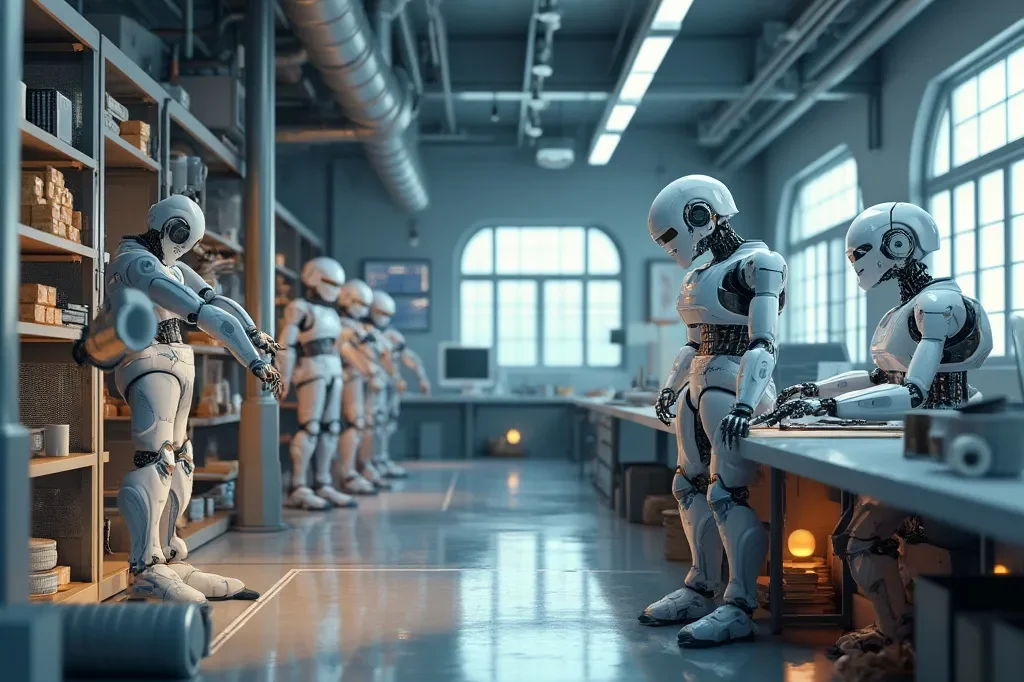
Automation and robotics are becoming increasingly important in the industrial world. By improving efficiency and reducing human error, these technologies help companies save costs and time.
Real-world examples: In factories, robots can perform repetitive tasks such as assembly and packaging faster and more accurately. Meanwhile, in the service sector, chatbots can help answer customer questions 24/7, improving service responsiveness.
Conclusion
Disruptive technologies have been and will continue to transform many aspects of global industry. By understanding and adopting these innovations, we can prepare ourselves for a more efficient and sustainable future. From AI to renewable energy, each technology has the potential to bring significant change. Get ready to face a new era where technology is the main driver of change.
Thus, knowing and following the developments in disruptive technologies is key to staying relevant and competitive in an ever-changing market.