The Internet. This word is now more often heard in the context of viral Instagram posts, Netflix series marathons, or heated debates about NFT prices. But have you ever stopped for a moment and asked, *how did* the internet we use today come into being? Where did it originate? It turns out, the story behind this global network is far more exciting and full of twists and turns than your favorite K-drama. This isn’t just an evolution, it’s a revolution that started from fear and was transformed by creativity.
Chapter One: ARPANET, Born from Cold War Anxiety
Forget TikTok scrolling for a moment. Let’s go back to the 1960s, the tense era of the Cold War. The United States, with all its anxieties about Soviet nuclear attacks, had a big assignment: how to create a communication system that wouldn’t be easily disrupted if one of its networks was bombed? This was the starting point for the Advanced Research Projects Agency (ARPA), an agency with a serious mission. Its goal was simple but crucial: to create a robust network that could still function and communicate even if parts of it went down.
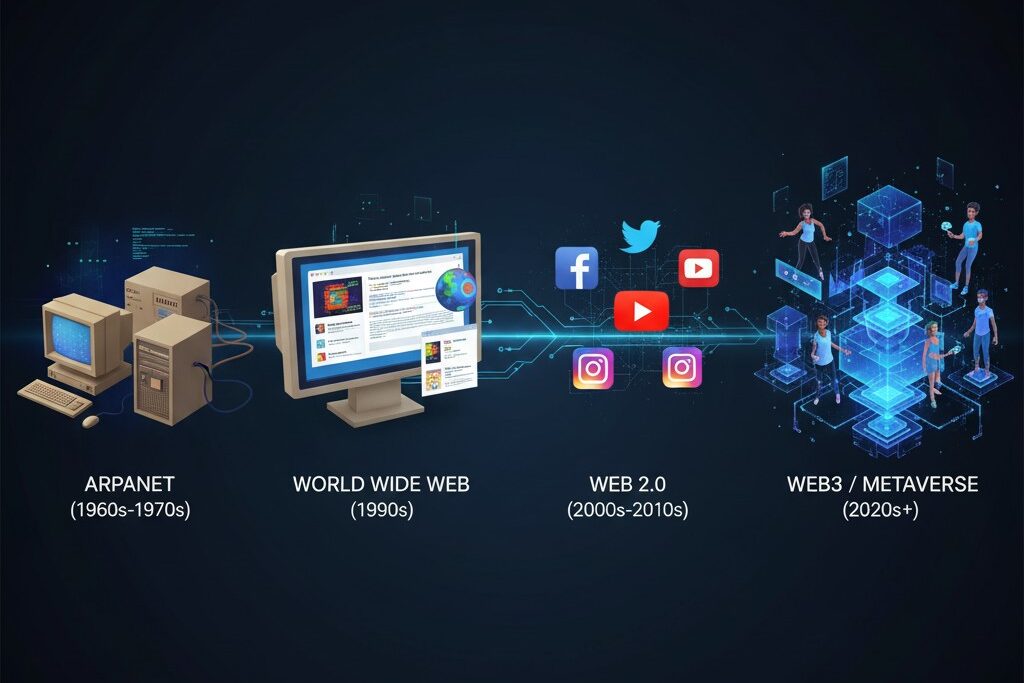
The result was ARPANET, which first went live in 1969. The key concept? Decentralization and ‘packet switching.’ Imagine you want to send a super important letter. Instead of writing it on one whole sheet of paper (which would be lost if torn), ‘packet switching’ is like breaking that letter into small pieces. Each piece can take different routes, and it’s okay if some get temporarily misplaced. Then, at the destination, all the pieces are reassembled into the complete letter. If one route is heavily jammed or closed, your letter pieces just find another way. Cool, right?
Why is this important? The basic principles born from military necessity unintentionally became the foundation of the internet. Decentralization and ‘packet switching’ made the internet not only resilient but also easy to expand and difficult for any single entity to control. Without this, our internet might now resemble a village road that’s easily blocked rather than an 8-lane highway accessible to everyone.
Chapter Two: TCP/IP and the Emergence of the World Wide Web, The Savior
ARPANET was up and running, but new problems arose. It turned out many other computer networks were emerging, but they couldn’t communicate with each other. It was like everyone having a phone, but with different carriers, so they couldn’t send SMS or make calls. This is where Vinton Cerf and Bob Kahn became heroes. They created the Transmission Control Protocol/Internet Protocol (TCP/IP). This is like a universal language for all networks. With TCP/IP, all networks could connect and exchange data smoothly. This was the crucial moment that gave birth to the ‘internet’ as we know it today.
But don’t imagine the internet in the 80s was colorful. It was still dominated by academics and researchers. It was complicated to use, all text-based. Until finally, in 1989, an English scientist at CERN named Tim Berners-Lee brought enlightenment. He didn’t just imagine it; he actually created the World Wide Web (WWW). His three main inventions: URLs (unique addresses for every piece of information), HTTP (the method to retrieve that information), and HTML (the language to create interconnected web pages using hyperlinks). This is what allows us to click on links and move from one page to another.
Why is this important? The World Wide Web transformed the internet from a complex data dump into an information medium accessible to everyone, with a more user-friendly visual interface. It was the main gateway that opened the internet to the public and triggered the explosion of digital content we enjoy today.
Chapter Three: Web 1.0 vs. Web 2.0, From Silent to Vocal
Entering the 1990s to the early 2000s. We call this Web 1.0. This was the era of the ‘read-only web.’ You were a passive consumer. Most websites contained only static information, like digital brochures that you couldn’t alter. The model was one-way, from the information provider to you, similar to television broadcasts or newspapers.
Then, around the mid-2000s, everything changed dramatically. We entered the era of Web 2.0, or the ‘read-write web.’ The emergence of blogs, Wikipedia, and especially the power of social media like Facebook, Twitter, and YouTube. Suddenly, you could not only read but also *create* and *share* your own content. The internet became a stage for collaboration, discussion, and social interaction. Ad-based business models reigned supreme, and user data became the new ‘gold’.
Why is this important? Web 2.0 democratized content creation and gave rise to what we know as the ‘creator economy.’ However, on the other hand, immense power became concentrated in the hands of a few giant tech companies. This raised significant concerns about data privacy, potential censorship, and information monopolies. We gained a voice, but that voice sometimes echoed in a ‘living room’ controlled by others.
Chapter Four: Web3 and the Metaverse, An Internet You Own?
The shortcomings of Web 2.0 spurred the birth of a new vision: Web3. The concept is that the internet should not only be readable and writable but also ‘ownable’ (read-write-own web). Powered by blockchain technology, Web3 promises to return control and ownership of data and digital assets back to the users, not corporations. Cryptocurrency, NFTs, and DAOs are some of its main pillars. It’s about deeper decentralization, where you truly own your digital assets.
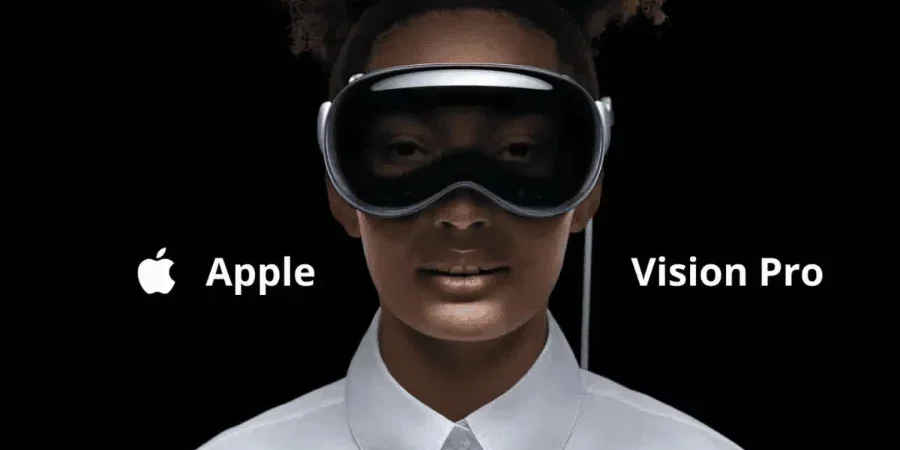
Concurrently, the concept of the Metaverse continues to evolve. Imagine an internet that you don’t just see on a flat screen but can enter and experience immersively through VR glasses or AR technology. This is a vision of a seamless integration of the digital and physical worlds. It’s not just about playing games but also about virtual meetings, shopping, or simply hanging out.
Why is this important? Web3 and the Metaverse represent the next most fundamental potential shift in how we interact with technology and each other. Both offer the promise of a more decentralized, immersive, and truly user-owned internet. However, of course, the path to fully realizing this vision is still long, filled with technical challenges, and awaits mass adoption.
From a military project driven by anxiety to becoming the main stage for global economy and social interaction, the history of the internet is a testament to relentless evolution. Each phase builds upon the foundation of the previous one, bringing new capabilities as well as new challenges. Understanding it isn’t just about sounding tech-savvy; it’s about preparing ourselves for the future of the internet, which is constantly moving, from mere finger taps to digital experiences that may one day be indistinguishable from reality.
Repiw’s Verdict: Buy or Skip?
Discussing the history of the internet doesn’t mean we should rush to switch to Web3 today. Rather, understanding this history is key. We gain a better understanding of why the platforms we use now have their strengths and weaknesses. We can be more critical of data privacy issues in the Web 2.0 era. And we can better appreciate the potential while also understanding the challenges behind the hype of Web3 and the Metaverse.
So, is it ‘worth it’ for you if you just want to browse, play games, or communicate? Absolutely. But understanding the ‘blood’ and ‘soul’ of this internet will make your experience far richer. It’s not just a tool; it’s a product of human civilization’s evolution that deserves our appreciation and, most importantly, our understanding so we can use it more wisely in the future.