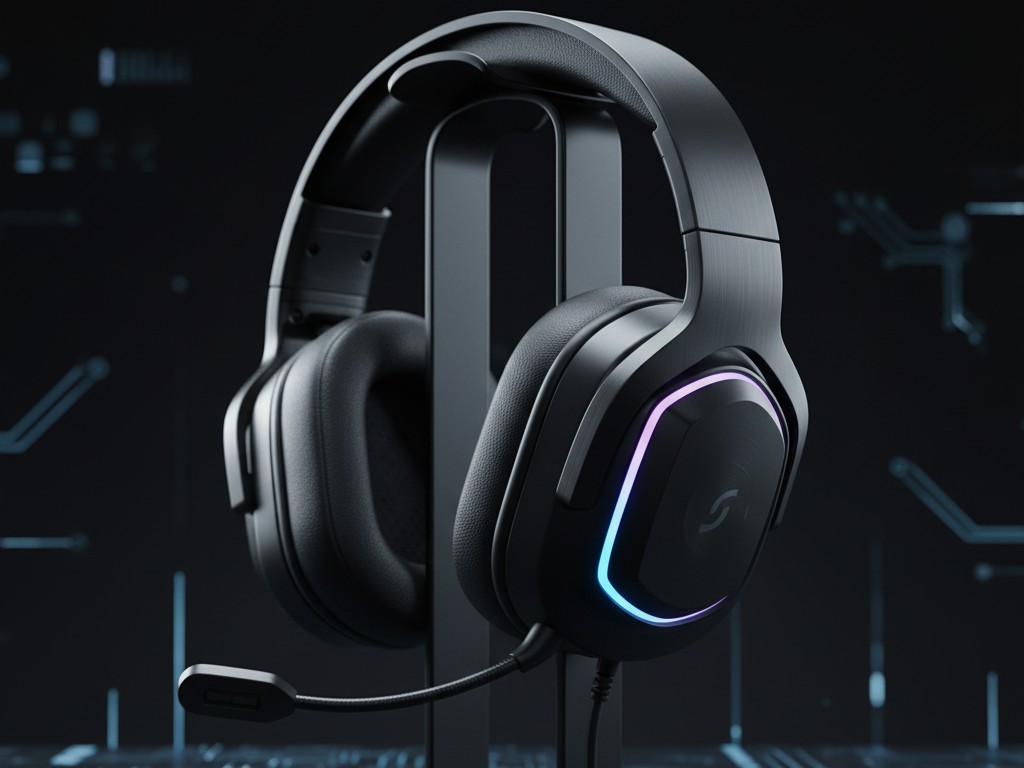
In the modern gaming ecosystem, audio plays a role as crucial as graphics. Sound not only serves to build an immersive atmosphere, but also provides crucial information that can determine victory or defeat, especially in competitive genres. Gaming headsets, therefore, have evolved from mere accessories to essential peripheral devices. However, the current market is filled with various models that offer a myriad of features and technical terminology that can confuse potential buyers.
This article aims to provide a comprehensive guide to choosing the right gaming headset by dissecting key factors such as sound quality, surround technology, microphone functionality, and connectivity options.
- Fundamental Audio Quality: Drivers, Soundstage, and Tuning
Before discussing additional features, the basic audio quality is the main foundation. This is determined by several elements:
- Driver: This is the component inside the earcup that converts electrical signals into sound waves. Driver size (usually measured in millimeters, e.g., 40mm or 50mm) is often promoted, but a larger size does not automatically mean better quality. Driver material and engineering are more influential. Neodymium drivers are generally considered the industry standard for good quality.
- Soundstage: This describes the perception of space and distance of sound. A wide soundstage makes you feel as though the sound is coming from around you, not directly in your ears. This is very important for open-world games and for determining the location of enemies. Headsets with an open-back design (the back of the earcup is open) tend to have a more natural and wide soundstage, but sacrifice sound isolation. In contrast, a closed-back design (closed) provides better isolation but with a generally narrower soundstage.
- Tuning: Each headset has a unique sound profile. Many gaming headsets have a ‘V-shaped’ tuning, where bass (explosions) and treble (footsteps, gunshots) frequencies are enhanced, while mid frequencies (vocals, some ambient sounds) are slightly reduced. This profile is attractive for gaming, but may be less ideal for listening to music.
Why this matters: Understanding these basics allows you to assess audio quality beyond marketing jargon. Good driver quality and soundstage are a long-term investment that will improve your gaming and other media experiences.
- Surround Sound Technology: Virtual 7.1 vs. Spatial Solutions
Surround sound is one of the main selling points of gaming headsets. The ability to provide positional audio—knowing from which direction the sound of gunfire or footsteps comes—is a significant tactical advantage. There are two main implementations:
- Virtual Surround Sound (VSS): This is the most common method. Stereo headsets (with one driver on each side) use software processing to simulate a 7.1 channel sound experience. Smart algorithms manipulate the time and volume of sound to create the illusion that sound is coming from various directions. The quality varies greatly depending on the software implementation from the manufacturer.
- Spatial Audio: This is an evolution of VSS. Technologies like Dolby Atmos for Headphones, DTS Headphone:X, and Windows Sonic not only simulate horizontal direction, but also vertical. You can distinguish whether the enemy is above or below you. These technologies are increasingly supported natively by modern games.
Why this matters: For competitive FPS (First-Person Shooter) game players like Valorant or Call of Duty, accurate positional audio is crucial. Choosing a headset with good surround implementation or compatibility with spatial audio can directly improve playing performance.
- Microphone Quality: Clarity of Team Communication
In multiplayer games, clear communication is key. The microphone quality on a gaming headset is often a differentiating factor.
- Pickup Pattern: The most common pattern is Cardioid (Unidirectional), which focuses on capturing sound from the front (your mouth) and dampening sound from the sides and back. This is ideal for reducing background noise such as keyboard or mouse sounds.
- Noise Cancellation: Many microphones are now equipped with software or AI to actively filter out unwanted noise, ensuring your voice is heard clearly by teammates.
- Certification: Certification from communication platforms like Discord or TeamSpeak can be an indicator that the microphone has been tested and meets certain clarity standards.
- Detachable/Retractable: Detachable or hidden microphones provide flexibility when you only want to use the headset for listening.
Why this matters: A bad microphone can lead to detrimental miscommunication for the team. Investing in a headset with a clear microphone ensures your instructions and tactical information are conveyed effectively.
- Connectivity and Other Factors
How the headset connects to your device is also an important consideration.
- Wired: Generally uses a 3.5mm jack or USB. Offers the most stable connection, without latency, and doesn’t need to be charged. The primary choice for professional and competitive gamers.
- Wireless: Provides freedom of movement. It is important to distinguish between 2.4GHz RF and Bluetooth connections. The 2.4GHz connection (using a USB dongle) offers much lower latency and is the standard for wireless gaming. Bluetooth is more universal but often has higher latency, less ideal for fast gaming. Note battery life as a major factor.
- Comfort: The headset will be used for hours. Pay attention to weight, clamping force, and earpad material (synthetic leather for isolation, fabric/velour for better air circulation).
Overall, choosing the right gaming headset is about balancing your specific needs—whether it’s competitive advantages, cinematic immersion, or team communication—with your available budget. By understanding the technology behind it, you can make informed decisions and significantly improve your gaming experience.