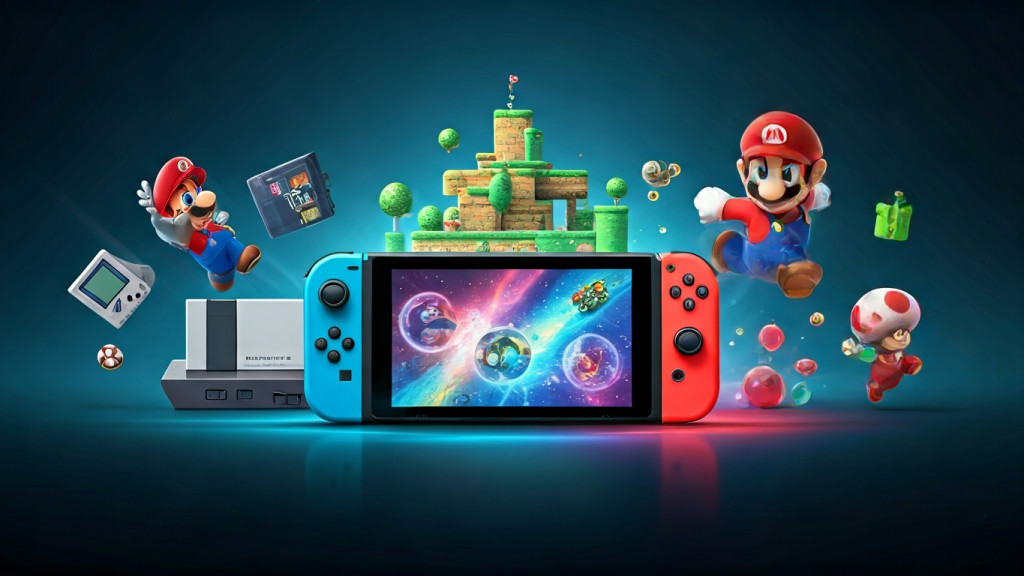
Nintendo is no longer just a console manufacturer; it has transformed into a formidable global entertainment powerhouse. The journey from the NES era to the triumph of the Switch is a testament to brilliant adaptation in a dynamic technological landscape.
- Consolidation of Development Units: Merging game development divisions was key to focusing creativity on a single platform like the Switch.
- Roster of Hit Games: The Switch’s success was fueled by the continuous strong sales of legendary game launches, ensuring the platform’s longevity.
- Business Diversification: Expansion into films, theme parks, and museums signifies Nintendo’s ambition as a cross-media entertainment kingdom.
- Long-Term Strategy: Leveraging the Switch’s success to build a broader entertainment ecosystem, preparing for industry dynamics.
Nintendo’s Transformation: From Console Dominance to Cross-Platform Entertainment Powerhouse
Nintendo, a name synonymous with innovation and joy, has navigated crucial phases in its history. It began by popularizing home consoles with the NES, surprised with motion controls on the Wii, and revolutionized touch screens with the Nintendo DS. However, the storms of success are often followed by ebbs and flows, as seen in the drastic decline in Wii U sales after the Wii’s golden era.
Now, Nintendo has rediscovered its solid foundation. The Nintendo Switch console has not only become their best-selling console of all time, surpassing the DS record with sales reaching 155 million units since its 2017 launch, but it also marks Nintendo’s resurgence as a more resilient entity in the face of rapid changes in the gaming industry.
The Key to the Switch Revolution: A Unified Development Unit and a Reservoir of Hit Games
One of the main pillars behind the Switch’s phenomenal success is Nintendo’s strategic decision in 2013 to unify its game development divisions. The merger of the home console and handheld divisions was crucial, as the Switch bridges both categories. As a result, Nintendo could direct its entire creative force onto a single platform. This has led to an unparalleled lineup of games, including Mario Kart 8 Deluxe, Animal Crossing: New Horizons, Super Smash Bros. Ultimate, The Legend of Zelda: Breath of the Wild, and Super Mario Odyssey, each selling over 30 million copies.
This structure also allows Nintendo to consistently release major titles throughout the Switch’s lifecycle. Even at the twilight of its prime, the platform is still being graced with new Zelda and Super Mario games. This positive trend is set to continue with the launch of the Switch 2, which is expected to start its journey strongly with a simultaneous release of a new Mario Kart game, followed by major titles like Donkey Kong and Metroid.
Boundless Expansion: Beyond the World of Video Games
More than just dominating the video game market, Nintendo has cleverly leveraged the Switch’s wave of success to expand into broader entertainment realms. In 2023, The Super Mario Bros. Movie set a global box office record of over $1 billion, paving the way for a highly anticipated sequel and a live-action Zelda film.
The company has also ventured into theme parks, opening its first park in Japan in 2021, followed by expansions to Hollywood and Florida, and plans for a Singapore opening. The Nintendo Museum itself, launched in 2024, further solidifies its position as a global entertainment kingdom. Now, Nintendo’s competitors are not just limited to gaming giants like Xbox and PlayStation, but also extend to media and entertainment realms like Disney and Netflix.
Shinya Takahashi, Senior Managing Executive Officer of Nintendo, wisely stated in 2023, “I think people see Nintendo as a game company. But we have always seen ourselves as an entertainment company.” This statement underscores Nintendo’s long-term vision that extends beyond mere console unit sales.
Long-Term Vision and Strategic Adaptation
While expansion into the film and television industries is not new for game companies, Nintendo demonstrates a deep understanding of the fragility of success. They are consciously using the Switch’s momentum to build a larger and more sustainable foundation.
These efforts reflect lessons learned from previous experiments, including their not entirely smooth initiatives in the mobile gaming market. However, the resurgence of the Switch era has allowed Nintendo to approach these new ventures with more mature focus and ambition. In fact, the company shows remarkable confidence by re-releasing the Virtual Boy for $100, one of their biggest failures, as a reminder of history and a lesson learned.
Today’s Nintendo is fundamentally different from the entity that launched the Switch in 2017. Its foundation is stronger, its future prospects are clearer, and its scope extends beyond video games. Nevertheless, future success cannot be guaranteed. The Switch 2, despite its strong initial potential, will face various external challenges beyond Nintendo’s control.
However, most importantly, the Switch 2 does not need to replicate its predecessor’s success exactly. Simply allowing Nintendo to maintain its momentum will be a significant leap in Nintendo’s evolution as an unstoppable global entertainment force.