
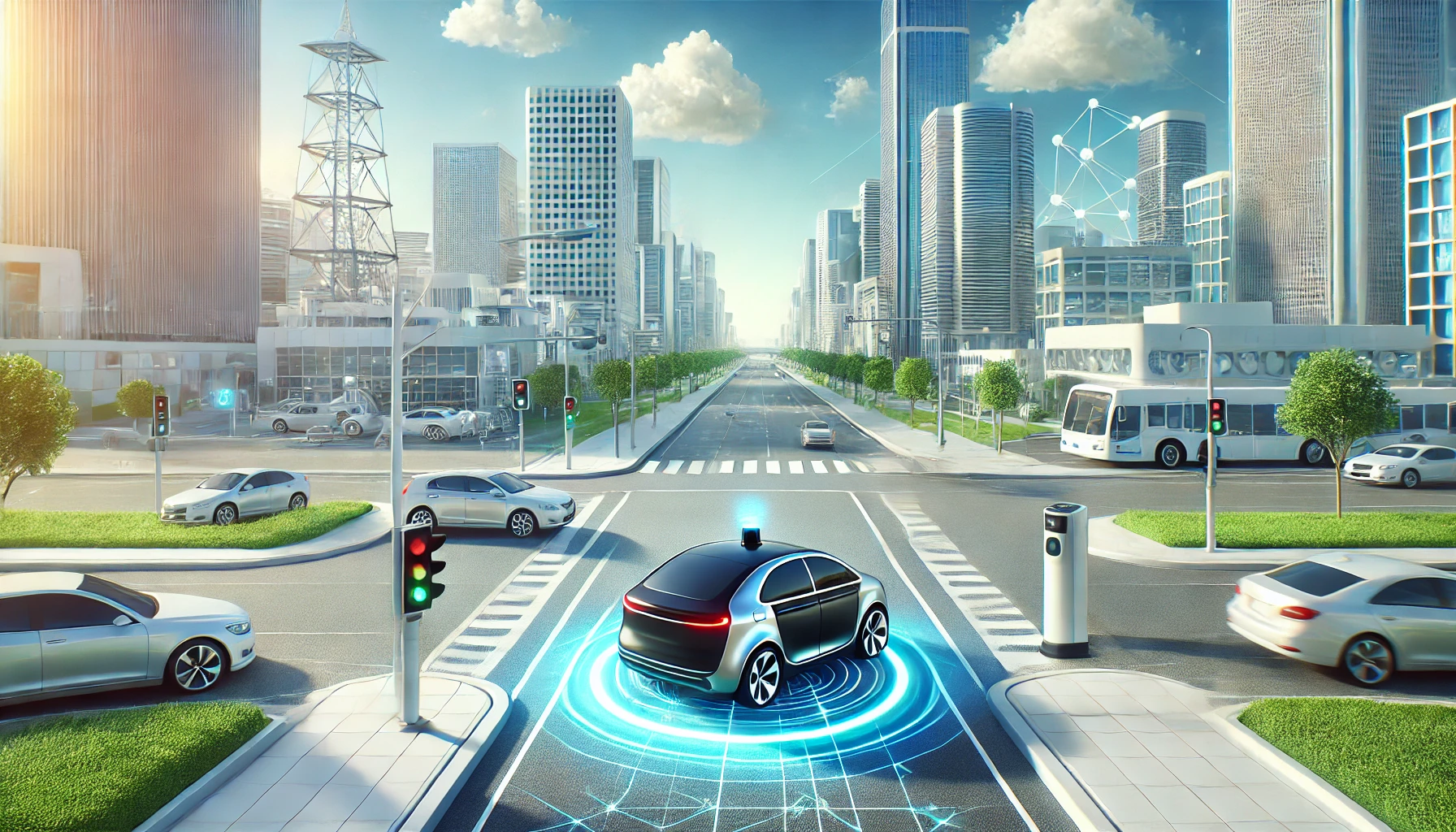
Get ready to cruise into the future with autonomous cars, a technology once confined to sci-fi films. We’re now on the brink of a revolution where vehicles can drive themselves without human intervention. We’ll dive deep into this advanced tech, its challenges, and how autonomous vehicles are poised to transform our lives. So, buckle up, because this is going to be an exciting ride!
What Exactly Are Autonomous Cars?
Okay, let’s get back to basics: what exactly is an autonomous car? It’s a vehicle capable of driving itself with the aid of advanced AI and sensor systems, completely free from human touch. Imagine you’re on the road, but this time you’re just sitting back, hands-free, eyes on Netflix, while your car safely navigates itself. With technology like this, autonomous cars aren’t just an innovation; they’re a fresh vision for modern transportation.
Why Are Autonomous Cars Important for Us?
So, why is this technology so compelling? Autonomous cars have the potential to significantly reduce accident rates, as most crashes are caused by human error. Now, just imagine how life would change with a self-driving car:
- No More Road Stress – Just relax without the hassle of driving in traffic.
- Higher Safety – Thanks to meticulous computer systems, the risk of accidents can drastically decrease.
- Increased Mobility – This technology allows seniors or people with disabilities to maintain high mobility.
- Efficient Time Use – Sleep or work during your commute without worrying about the road.
Pretty cool, right? Autonomous cars are set to transform how we think about daily mobility!
The Technology Behind Autonomous Cars
Now, let’s peek at the “brainpower” behind these smart cars. From super sensors and artificial intelligence (AI) to advanced navigation systems. Here are the details:
- Lidar (Light Detection and Ranging)
Lidar is a laser sensor that maps the car’s surroundings in 3D. With thousands of laser reflection points per second, the car can detect details as small as a blade of grass on the road. - Radar and Cameras
Radar measures the distance and speed of surrounding objects, while cameras help the car “read” traffic signs and road markings. Together, radar and cameras enable the car to “see” in low-light conditions. - GPS and IMU (Inertial Measurement Unit)
GPS provides location data, while IMU measures the vehicle’s motion and orientation. They work in tandem to ensure the car always knows where it is. - AI and Machine Learning
This is the “brain” behind autonomous cars. AI processes all sensor data in milliseconds, making lightning-fast decisions and continuously learning from every journey.
Levels of Autonomy in Cars
FYI, not all autonomous cars are created equal. According to the Society of Automotive Engineers (SAE), autonomous vehicles have five levels:
- Level 0: No automation.
- Level 1: Driver assistance (e.g., cruise control).
- Level 2: Partial automation (e.g., adaptive cruise control with lane keeping, often referred to as ‘autopilot’ by some manufacturers, but still requires driver supervision).
- Level 3: Conditional automation (the driver can disengage in certain conditions).
- Level 4: High automation (the vehicle can drive itself in most situations).
- Level 5: Full automation (the vehicle can drive itself without human intervention in all situations).
Autonomous cars at Level 4 and 5 are the industry’s ultimate goal, and technology is currently in a race to reach these stages!
Challenges on the Road to an Autonomous Future
Of course, this advanced technology comes with hurdles and challenges that need to be overcome before autonomous cars can be widely adopted. Here are some of the main challenges:
- Ethical Dilemmas
What if a car has to choose between hitting a pedestrian or saving its passengers? These choices spark ethical debates. - Cybersecurity
Reliance on computer systems means cars are vulnerable to cyberattacks. Hackers could attempt to remotely take control of a vehicle. - Regulations and Laws
Legal frameworks must adapt to this technology, including issues of liability in accidents. - Weather Challenges
Extreme weather conditions, such as heavy rain or snow, can impair the performance of car sensors. - Public Trust
Not everyone trusts this technology. It will take time for the public to feel comfortable entrusting their safety to autonomous vehicles.
The Future: What Can We Expect?
Considering the technological advancements and existing challenges, we can anticipate several things in the future, such as:
- More Car Brands Joining In
Major automotive companies and tech startups will compete to introduce their own versions of autonomous cars. - Integration with Smart City Infrastructure
Imagine roads, traffic lights, and cars all connected to create seamless traffic flow. - New Business Models
Autonomous ride-sharing services could become the next big business. - New Interior Designs
Car cabin designs could completely transform, perhaps becoming mini living rooms on wheels.
Perhaps, in a few years, driving will become a thing of the past!
Editor’s Take
Autonomous cars aren’t just changing how we drive; they’re transforming how we live. Imagine, the time we once spent driving can now be used for other things. However, while the technology is impressive, there’s still a lot of homework to be done.
For the tech-savvy among you, autonomous cars symbolize the future world we dream of—fully automated, stress-free, and undoubtedly tech-friendly. Are you ready to embrace a driverless future? The road to an autonomous world is long, but without a doubt: it’s going to be an exciting journey!