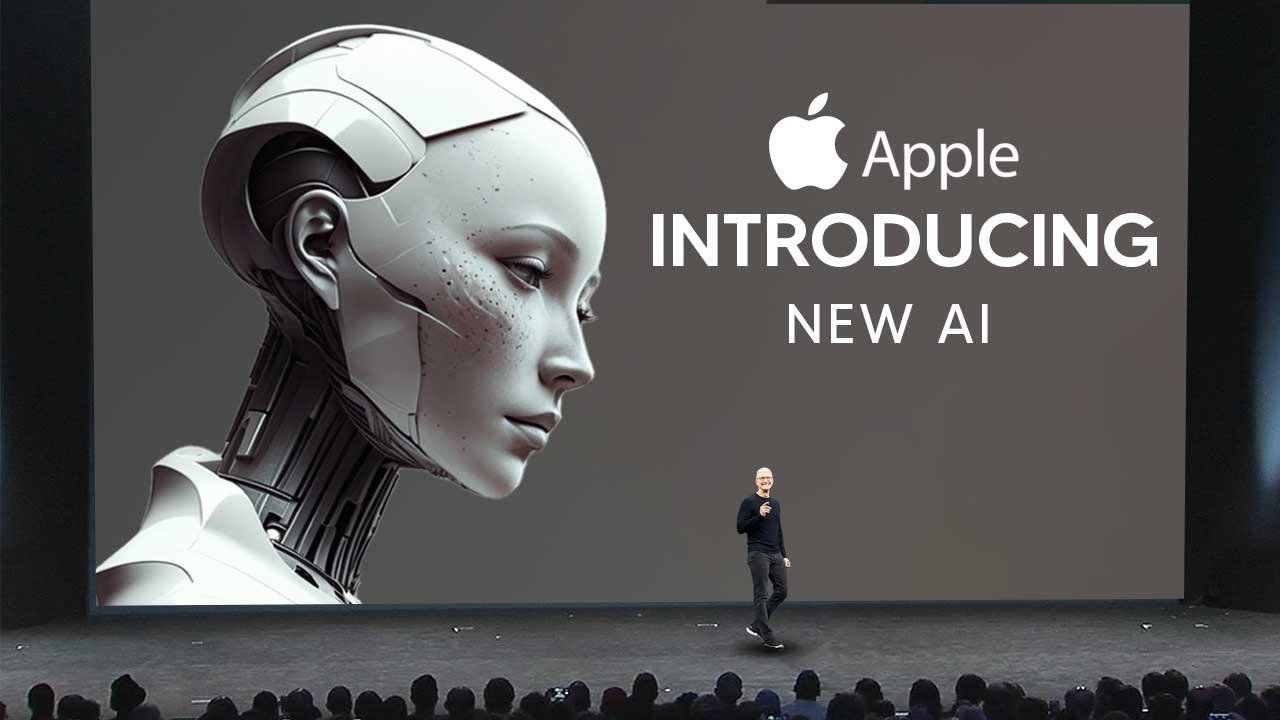
Apple’s Distinct Approach in the Global AI Race
Amidst the buzz of generative artificial intelligence (AI) innovations showcased by tech giants like Google, Microsoft, and OpenAI, Apple has consistently chosen a more measured and closed approach. However, this doesn’t mean the company is idle. Behind the scenes, Apple is actively strengthening its AI foundation, with a clear focus on deep integration into its device ecosystem. This is a crucial step to ensure relevance and competitive advantage in an increasingly AI-dominated technology market. Why is this important? Because this approach has the potential to redefine the user experience and set a new standard for personal and secure AI.
Talent Acquisition and Global Laboratories: Long-Term Investment
Apple’s seriousness in AI development is reflected in its aggressive recruitment strategy. Reports indicate that Apple is actively recruiting key talent from leading AI companies, including engineers and researchers from Google DeepMind. This talent acquisition is not merely about gaining an edge, but to accelerate the development of large language models (LLMs) and Apple’s internal generative AI technologies, which are expected to involve projects like “Ajax” and “Apple GPT.”
In addition, Apple is also reported to operate strategic AI research laboratories in various locations, including in Europe, such as Zurich, Switzerland, and London, England. These laboratories serve as innovation centers for recruited AI experts, ensuring Apple has a strong knowledge and development base. Why is this important? Because investment in human resources and research facilities demonstrates Apple’s long-term commitment to becoming a leader, not just a follower, in AI innovation. This also allows Apple to develop core technologies independently, reducing reliance on third parties.
Focus on On-Device AI and User Privacy
Unlike many competitors that rely on cloud-based AI, Apple’s core strategy is to integrate AI capabilities directly into devices (on-device AI). This approach enables local data processing, which significantly enhances user privacy and reduces latency. The goal is to create features that feel “magical” and intuitive, without explicitly highlighting the label “AI.” This aligns with Apple’s philosophy of always prioritizing a seamless user experience and the protection of personal data.
The development of Apple Silicon chips, both the A series for iPhones and the M series for Macs, with increasingly sophisticated Neural Engines, is the main pillar of this strategy. The Neural Engine is specifically designed to handle AI and machine learning workloads efficiently, enabling complex AI features to run directly on the device without the need to send sensitive data to external servers. Why is this important? Because privacy has become Apple’s main differentiator in the market. With on-device AI, Apple can offer advanced features while upholding its commitment to privacy, building stronger trust with its users.
Projected Apple AI Integration by July 2025
By mid-2025, industry analysts and rumors project several significant developments from Apple in the AI realm:
- Siri Enhancement: Siri is expected to undergo a major overhaul, becoming more contextual, multimodal, and capable of engaging in more natural and complex conversations thanks to the integration of internal LLMs. This will enable Siri to manage more complex tasks, such as summarizing emails, scheduling based on conversational context, or even generating short text.
- Smart Productivity Features: iOS 18 (to be launched in late 2024) and possibly iOS 19 (in late 2025) are projected to bring generative AI features to built-in apps such as Pages, Keynote, and Safari. This could include text automation capabilities, document summarization, or even simple image creation.
- Camera and Photo Improvements: AI will increasingly enhance computational photography capabilities, allowing for more advanced photo and video editing in real-time directly on the device, such as more precise object removal or adaptive lighting adjustments.
- Deep Personalization: With on-device AI, Apple devices will increasingly be able to understand individual usage patterns and preferences, enabling deeper personalization of the experience across the ecosystem, from more relevant notifications to smarter app recommendations.
Why is this important? Because this deep AI integration will be a major driver for users to stay within the Apple ecosystem, while also attracting new users who seek a combination of AI innovation, privacy, and optimal device performance. It will also strengthen Apple’s argument for hardware refresh cycles driven by new AI capabilities that require the latest Neural Engine.
Impact and Competitive Position
With massive resources and a clear focus on privacy and ecosystem integration, Apple’s AI implementation is predicted to be a game-changer. While it may not be as spectacular as the launch of versatile chatbots, the impact of Apple’s AI will be felt gradually but significantly in everyday user experiences. This is a strategic step to ensure the Apple ecosystem remains relevant, innovative, and competitive in the AI era. Apple seeks not only to catch up but also to redefine how AI can be implemented in a user-centered and privacy-oriented way.