Smart Homes Are No Longer Just a Trend, But a Necessity. But Why the Confusion in Choosing the “Brain”?
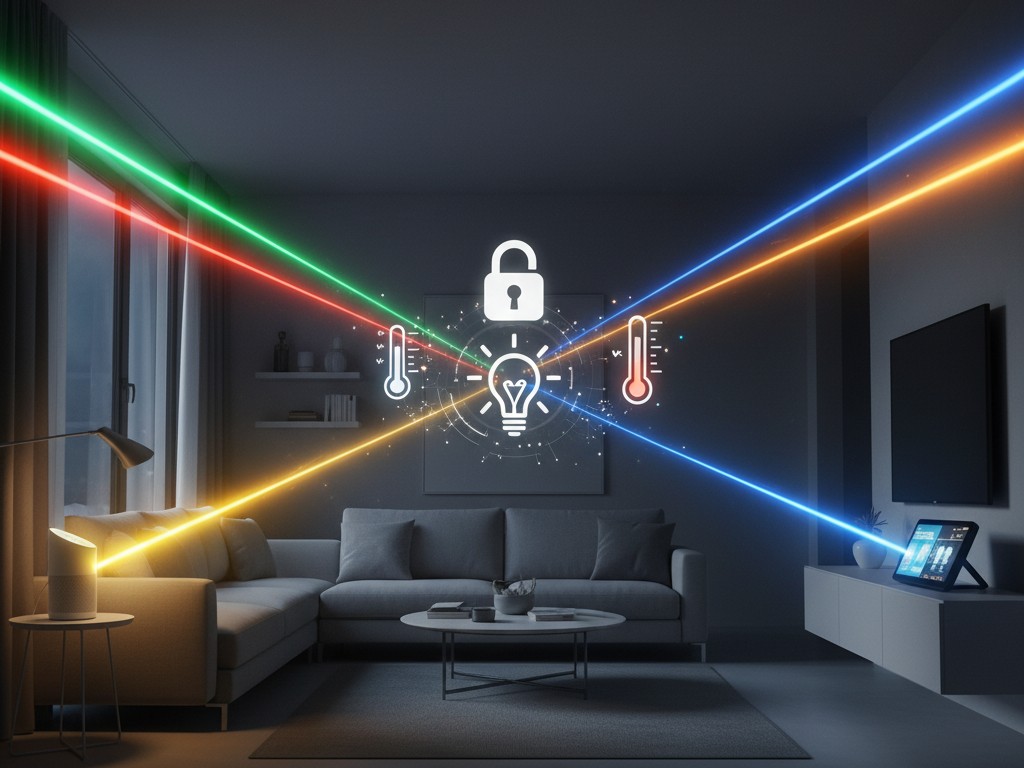
Back then, having a house where lights could turn on and off on command with just your voice felt like a dream from a sci-fi movie. Now? It’s commonplace. We’re all more aware, no longer wanting to be bothered by trivial matters. From setting the perfect room temperature, securing the house from uninvited guests, to playing your favorite music when you’re too lazy to lift a finger. All of this can be done with just your voice or a tap on your phone screen.
Now, this is where it gets confusing. You want to make your home smart, but you’re presented with choices that make your head spin? Google, Apple, and Amazon, these three tech giants are vying to become the primary “brain” of your dream home. Each comes with its own arsenal, pros and cons, and a different perspective on smart homes. This article isn’t about fluffy sales talk, but about giving you an honest answer: which one is the most worth it for you?
The Foundation of a Smart Home: How Do They “Talk”? (Not Rambling, This is Important!)
Before we dive into the battle of each contender, it’s crucial to understand how these smart devices actually “talk” to each other. Think of it as a universal language used in the smart home world. Forget the brands for a moment, understand the technology first.
Wi-Fi: The Champion Already in Every Home
This is nothing new. Almost every home has Wi-Fi now, right? Devices that use Wi-Fi connect directly to your router. The advantage? Super easy to set up, no extra equipment needed. But, if your home is already overflowing with Wi-Fi devices, be prepared for your network to feel like a highway during peak hours: congested.
Zigbee & Z-Wave: More Efficient Shared Networks
These two use a low-power mesh networking concept. Simply put, each device plays a role in relaying signals to other devices. The result? A stronger, more stable network, and most importantly, it doesn’t bog down your main Wi-Fi. However, keep in mind, they require a special “bridge,” meaning a dedicated hub or bridge, to communicate with your phone.
Thread & Matter: The Future is Already Here
This is what’s trending and predicted to be the future standard for smart homes. Matter is like a new set of rules that allows devices from different brands to get along and work together without drama. Meanwhile, Thread is a mesh network protocol like Zigbee, but it’s fully supported by the tech giants. So, if you’re looking for a long-term investment, look for devices that are Matter-over-Thread enabled. You won’t regret it, as it will be compatible with all major ecosystems.
Team Google: Google Assistant, The Most “Understanding” Brain
When you think of Google, the first thing that comes to mind is definitely Google Assistant. This voice assistant is the best at understanding human language, especially if you like to ask all sorts of questions. It’s like having a personal assistant who not only follows commands but can also have a conversation.
The Full Power of Google
- Google Assistant is the Smartest: Its ability to answer general knowledge questions, understand complex commands, and create intricate routines is unmatched. If you already use many Google services like Gmail, Calendar, or Maps, the Assistant will feel like an extension of yourself.
- Cool Nest Devices: Google has a line of Nest products that are not only stylish but also functional. From smart speakers like Nest Audio and Nest Mini, smart displays like Nest Hub, to thermostats and security cameras. Everything connects seamlessly with each other.
- Broad Compatibility (Thanks to Android): Because Google is an open platform, thousands of devices from other brands can connect to Google Home. Philips Hue lights? August smart locks? They can all play together.
Aspects to Be Aware Of
- Apps That Sometimes Make You Think Hard: The Google Home app indeed has many features, but it can sometimes be confusing when you want to set up more complex automations. It requires a bit of patience to tinker with.
- Privacy Concerns (More of a Perception): Being Google, its main business is data. So, it’s natural for some to be wary of handing over home control to Google. Although Google has strict privacy policies, that sense of unease sometimes arises.
Who is it Suitable For?
For those of you who use Android phones, are already immersed in the Google ecosystem, and want the smartest voice assistant in the world. Google Assistant in your home will be the boss.
Team Apple: HomeKit, Top Priority: Privacy and Security
Apple’s philosophy in the smart home world is the same as their other products: simple, secure, and everything connected within one ecosystem. If you own an iPhone, iPad, or Mac, HomeKit is like the destined soulmate for you.
Advantages of the Maroon Team
- Champion Privacy and Security: HomeKit was built from the ground up with privacy in mind. All communication is end-to-end encrypted, so Apple won’t collect your smart home usage data to sell to advertisers. Features like HomeKit Secure Video even secure your camera recordings before they are uploaded to iCloud.
- Easy-to-See and Use Interface: The “Home” app on iPhone, iPad, and Mac is clean, simple, and a joy to look at. Creating automations or what are called “Scenes” feels as easy as playing a game.
- Stable and Reliable: Because Apple has strict certification standards (“Works with Apple HomeKit”), devices that pass are usually super stable and responsive. Moreover, many controls are local, so if your internet goes down, your home still functions.
Drawbacks to Note
- Tightly Bound to the Apple Ecosystem: Yes, you can’t avoid it. You need an Apple device like an iPhone, iPad, or Apple TV/HomePod to act as the hub. If you’re an Android user, then forget about HomeKit for now.
- Device Selection is Still a Bit Limited: Although it’s constantly growing, the number of devices compatible with HomeKit is still less than Google or Amazon. This is because Apple doesn’t grant certification lightly.
Who is it Suitable For?
For those of you who already own many Apple devices, and for whom privacy and security are the number one priority above all else. HomeKit is your smart home’s defense fortress.
Team Amazon: Alexa, The King of Compatibility
Amazon was like a pioneer in the smart speaker market with Alexa. Their advantage? Insane compatibility. If you like to mix and match devices from different brands, Alexa is the most flexible choice.
Alexa’s Champions
- Most Insane Device Compatibility: This is Alexa’s absolute advantage. Almost every smart home product on the market has an Alexa “Skill.” Want light A, lock B, or thermostat C? Just check, chances are it can connect.
- Variety of Echo Devices: Amazon has a super wide selection of Echo devices, from the cheapest like the Echo Dot to those with large screens like the Echo Show. Just adjust according to your budget and needs.
- Powerful Routines and Automations: The Alexa app makes it very easy to create routines tailored to your preferences. Often more flexible than Google or Apple.
Things to Ponder
- Voice Assistant Not as Smart as Google: Alexa is great at controlling devices and executing commands. But when it comes to general knowledge conversations or understanding longer conversations, it still lags behind Google Assistant.
- Too Focused on Shopping: As Amazon, an e-commerce giant, Alexa will frequently remind you to shop, which can sometimes be a bit annoying.
Who is it Suitable For?
For those of you who want maximum flexibility to connect devices from any brand, and who are looking for the most affordable entry point into the smart home world. Alexa is the bridge to all kinds of devices.
Review Verdict: Choose the Right Brain for Your Future Home
There’s no single right answer for everyone. Your smart home ecosystem choice should align with your lifestyle, the devices you already own, and how comfortable you are with technology.
- Choose Google Home/Nest if you want the most cutting-edge AI intelligence and deep integration with Google services.
- Choose Apple HomeKit if you are a loyal Apple user, prioritizing privacy, security, and elegant simplicity.
- Choose Amazon Alexa if your priority is unmatched device compatibility and the flexibility to build a system according to your preferences.
The good news is, with the advent of the Matter standard, the boundaries between these ecosystems will gradually blur. But, for now, choosing one primary platform as a foundation will give you the smoothest and most reliable experience. So, choose wisely, and welcome to the future of smarter living!