The Unseen Threat on Our Screens: Understanding the Blue Light Spectrum
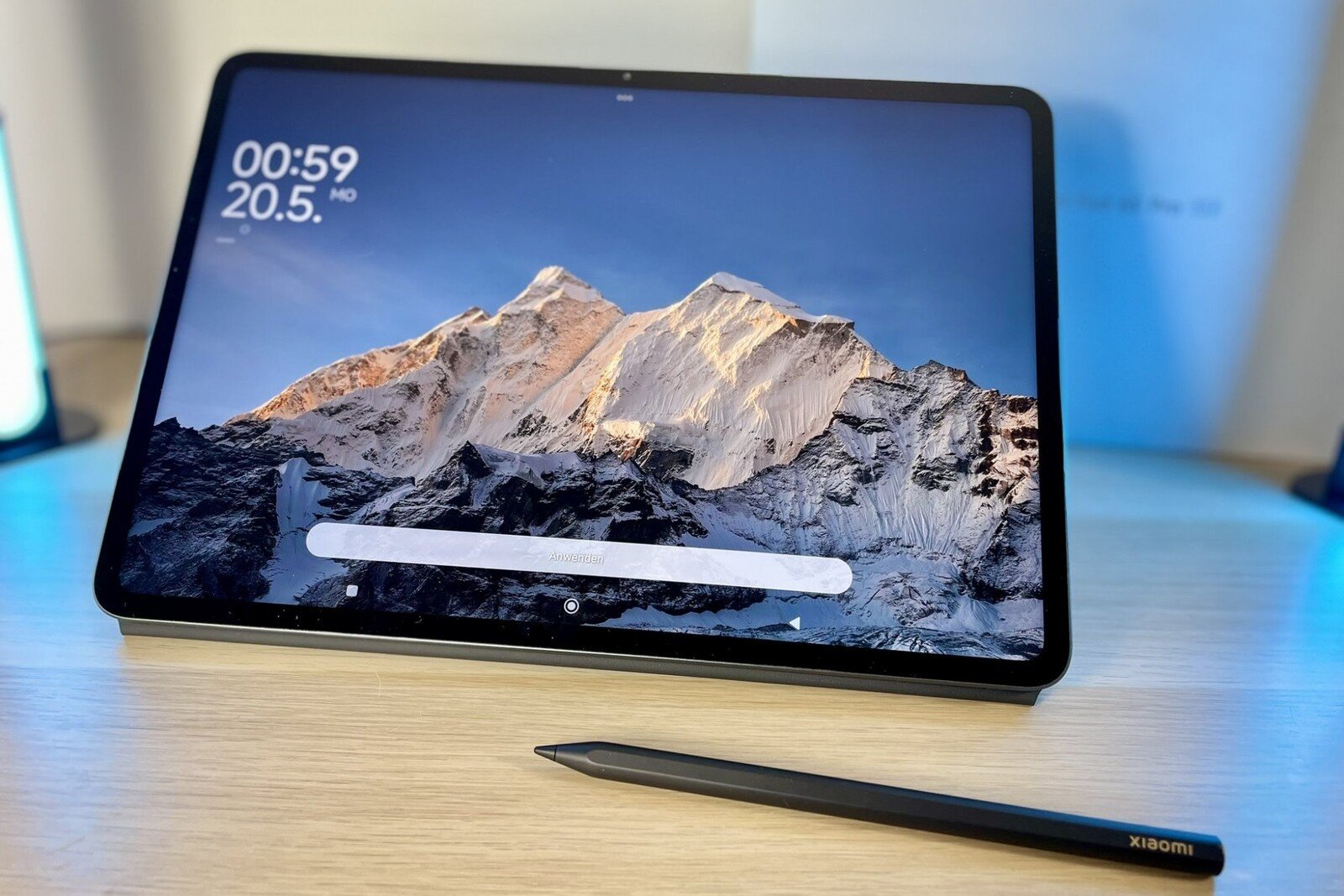
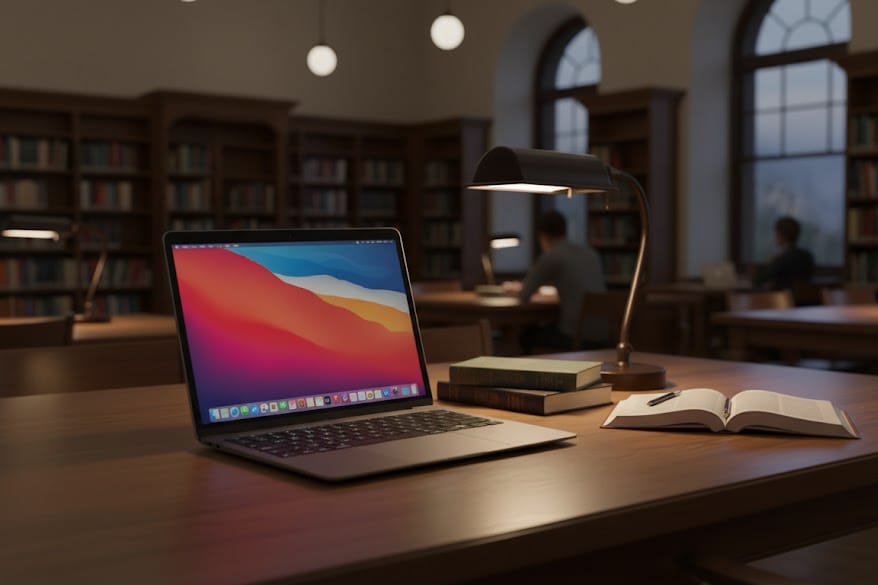
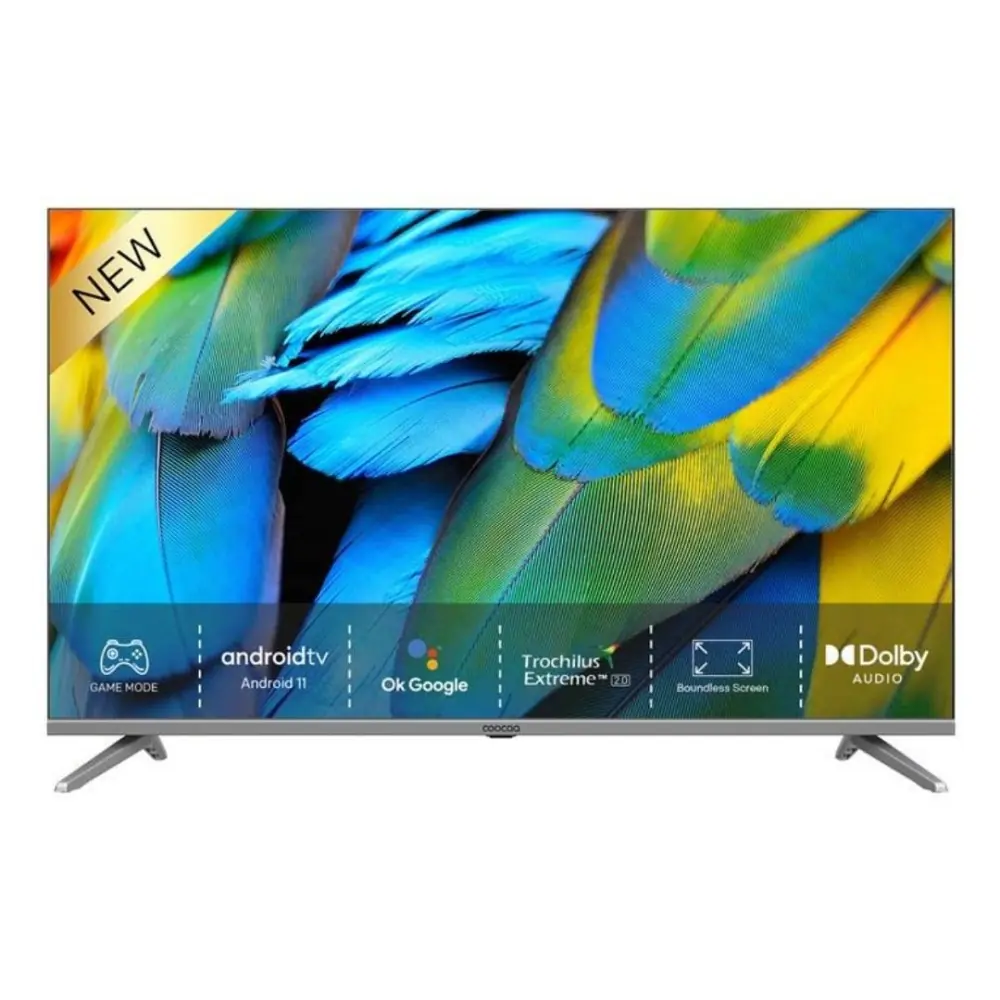
In the last two decades, I’ve witnessed firsthand how IT infrastructure has evolved, pulling us deeper into the inevitable digital age. However, behind the convenience and connectivity offered, lies a often-overlooked challenge: intense exposure to blue light from our digital devices. Computers, smartphones, tablets, and televisions emit this high-energy visible light spectrum. Why is this important? Because excessive exposure, especially at night, doesn’t just cause dry eyes or momentary eye strain (known as digital eye strain or computer vision syndrome).
Physiologically, the blue light wavelengths (around 400-490 nm) have a significant impact on the body’s circadian rhythm, our internal biological clock. Exposure to blue light, especially during hours when we should be resting, can suppress the production of melatonin, a sleep-inducing hormone. As a result, sleep quality is disrupted, which in turn affects our focus, productivity, and even our mental health in the long term. Furthermore, some initial studies indicate that blue light could potentially contribute to oxidative stress in retinal cells, although further research is still needed to confirm the long-term impact on macular degeneration.
Proactive Defense: How Blue-Light Glasses Work
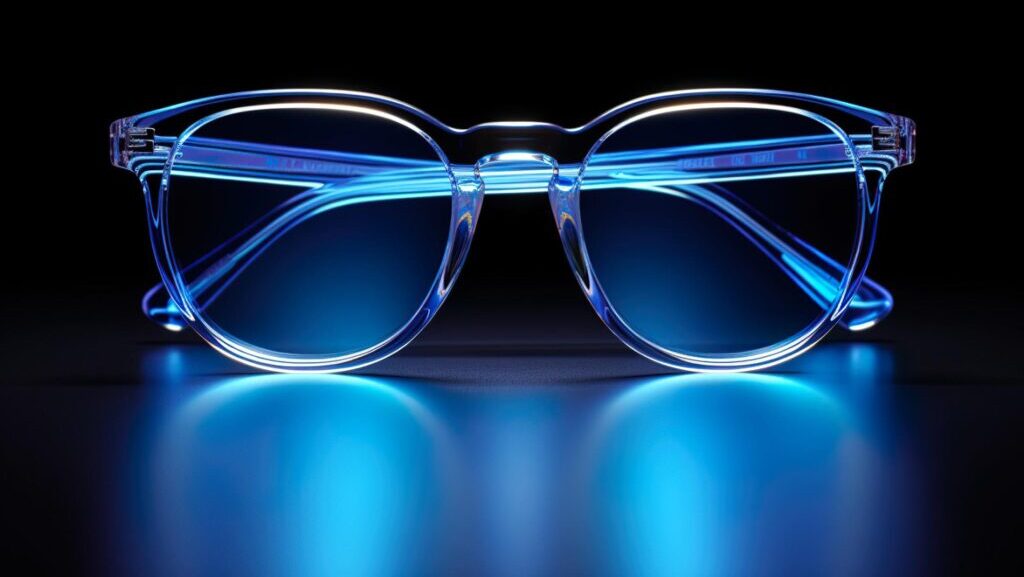
Seeing this urgency for protection, blue-light filtering glasses emerge as a proactive solution. But how does this technology work? These glasses don’t simply block all blue light; they are equipped with special coatings (often multi-layer dielectric coatings or pigment-infused lens materials) designed to selectively block or absorb a portion of the most harmful blue light spectrum, while still allowing other light spectrums that are important for normal vision. In addition, many blue light filter glasses also integrate ultraviolet (UV) protection, which is known to be detrimental to the eyes.
The mechanism of action is to reduce the amount of high-energy blue light that reaches your eyes. This helps to minimize glare, enhance contrast, and most importantly, reduce digital eye fatigue. The long-term impact is the potential mitigation of sleep disturbances and the protection of the retina from potential damage due to chronic exposure. This is similar to how we implement firewalls or endpoint protection; not to block all traffic, but to filter out specific threats identified as dangerous.
Implementing Solutions: Choosing the Right Protection for Your Digital Lifestyle
For Prescription Glasses Users: Seamless Integration
For those of you who already wear prescription glasses, adding a blue light filter coating is an efficient option when ordering new lenses. Many modern optical providers, both physical and online, offer this feature for a relatively affordable additional cost. This is the integration of an eye protection solution into the device you already use every day, ensuring comfort and effectiveness without the need to adapt to two different types of glasses.
For Non-Prescription Users: Shields for Digital Professionals and Gamers
For those who do not require vision correction but interact intensely with screens — let’s say professional gamers, developers, data analysts, or office workers who spend 8+ hours in front of a monitor — non-prescription glasses with blue light filters are a very wise investment. Specialized brands like Gunnar have designed lenses with specific blue light blocking percentages, tailored to intense visual needs. The choice ultimately depends on your exposure intensity, aesthetic preferences, and budget, but the principle remains the same: prioritizing eye health as an integral part of your overall digital well-being. This is a proactive step in health risk management in this interconnected era.
More than Just an Accessory: A Strategic Investment for Digital Well-being
As someone who has been involved in the world of technology for a long time, I see blue-light glasses not just as a trend or fashion accessory, but as a vital component in a digital health management strategy. It is an investment that goes beyond momentary comfort, towards long-term protection of a vital organ in an era dominated by screens. Understanding the ‘why’ behind the dangers of blue light and ‘how’ this technology can provide protection, allows us to make smarter and more proactive decisions to safeguard our most valuable asset: our eyes.