Introduction: Google Pixel 9 Pro Fold – An Analysis After Nearly a Year in the Market
Hello, Repiw.com readers! Warteknet here. It’s May 2025, and at least nine months have passed since Google launched the highly anticipated Pixel 9 series, with its main star, the Pixel 9 Pro Fold, in August 2024. For me, who has been in the IT infrastructure and cybersecurity field for over two decades, this move by Google is not just about launching a new phone; it’s a deep strategic statement, a big gamble in the unforgiving foldable phone market. Let’s dissect together why the Pixel 9 Pro Fold is important and how it will impact the long-term landscape of mobile computing.
Why is Google “Persistent” in the Foldable Phone Market? Urgent Long-Term Strategy
Many ask, why is Google so insistent on foldable phones? The answer is simple yet fundamental: differentiation and ecosystem control. In a smartphone market already saturated with “slab” designs, the foldable form factor offers a new playing field that allows for innovation on both the hardware and software sides. Google, as the main Android developer, needs to prove that its platform is capable of adapting and even leading trends in future devices. The Pixel 9 Pro Fold is a showcase of Android’s capabilities in next-gen devices, as well as an effort to shape industry standards, not just follow other players. This is a crucial step to prevent excessive fragmentation in the premium segment and ensure that the Android user experience on foldable devices remains optimal and uniform. In my opinion, this is Google’s long-term investment to ensure they remain relevant as hardware innovators, not just software providers.
Market Expansion: Not Just Geography, but Ecosystem Foundation
One of the most significant changes of the Pixel 9 Pro Fold is the drastic expansion of its availability, from four countries in the previous generation to nine. This is not just about numbers, folks. This is a mature market penetration strategy. Launching in key markets such as Australia, Canada, Singapore, and several European countries, Google is trying to build a wider user base and, importantly, gather diverse usage data. For us in Southeast Asia, availability via Singapore is not only good news, but also an indication of Google’s regional hub strategy. Singapore, with its advanced digital infrastructure and its status as a business center, often serves as a gateway for new technologies to other regions. With a wider market reach, Google hopes to encourage app developers to take more seriously the optimization of their applications for the foldable form factor, which will ultimately enrich the entire Android ecosystem and increase the appeal of Google’s foldable devices.
Design and Engineering Innovation: From Aesthetics to Functional Durability
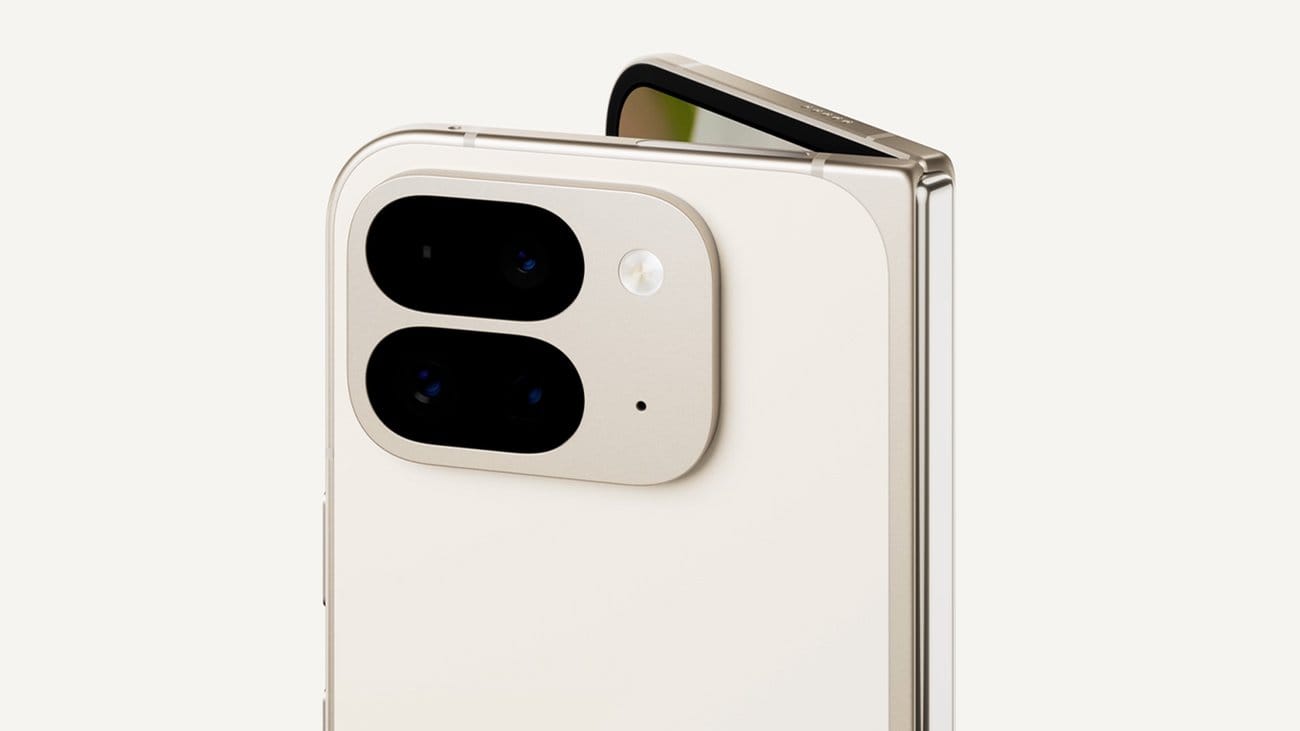
Design leaks that were later confirmed at launch showed a significant refresh on the Pixel 9 Pro Fold, especially on the rounded square camera module. This is not just a cosmetic change, but could also be thermal optimization or better sensor placement. In foldable devices, engineering challenges are everywhere: from the hinge mechanism that must be tough and precise, to the durability of the screen that is prone to folds and scratches. Design is a reflection of technical solutions. Google, with a design approach that focuses on functionality and a cohesive user experience, is trying to overcome these problems. A more modern and sleek design also contributes to a premium perception, important for competing in this high-price segment. The tight integration of hardware and software becomes key to ensuring that this device not only looks good, but also functions smoothly in various folding modes.
Gemini AI: The Brain Behind a Different Foldable Experience
And here’s the most exciting part for me: the deep integration with Gemini AI. This is a game changer. In foldable devices, AI is not just an added feature, but the core of the experience. Imagine: a larger, flexible screen provides the perfect canvas for the multimodal capabilities of Gemini AI. Features like “Circle to Search” become more intuitive, the ability to summarize documents on dual screens, or even smarter real-time transcription when the device is folded into tent mode for video calls. On-device AI allows for faster and more personalized processing, reducing latency and dependence on an internet connection. This is not just about running AI models; it’s about how AI leverages the uniqueness of the foldable form factor to create usage scenarios that were previously unthinkable, from increasingly sophisticated computational photography to more contextual and proactive personal assistants.
The Future of Mobile Computing: Analysis of Google’s Prospects and Challenges
With the Pixel 9 Pro Fold, Google is showing that they are serious about working on the future of mobile computing which is no longer just a “slab” smartphone. This is a strategic investment that has the potential to change the way we interact with technology. However, the journey is still long. The challenges are not small: the still-high price of foldable devices, the perception of durability, and the dominance of established players like Samsung. The question now is, has Google succeeded in convincing consumers that the AI innovation and unique design of the Pixel 9 Pro Fold offer value commensurate with their investment? From my point of view, Google is laying the foundation for a more mature foldable device ecosystem, where hardware, software, and AI merge harmoniously. The long-term success of the Pixel 9 Pro Fold will be an important indicator of how quickly the market for foldable device adoption will develop, and how Google will establish its presence in the increasingly competitive premium segment.