How to Upgrade RAM and SSD in a Laptop: A Step-by-Step Guide for Beginners to Intermediates
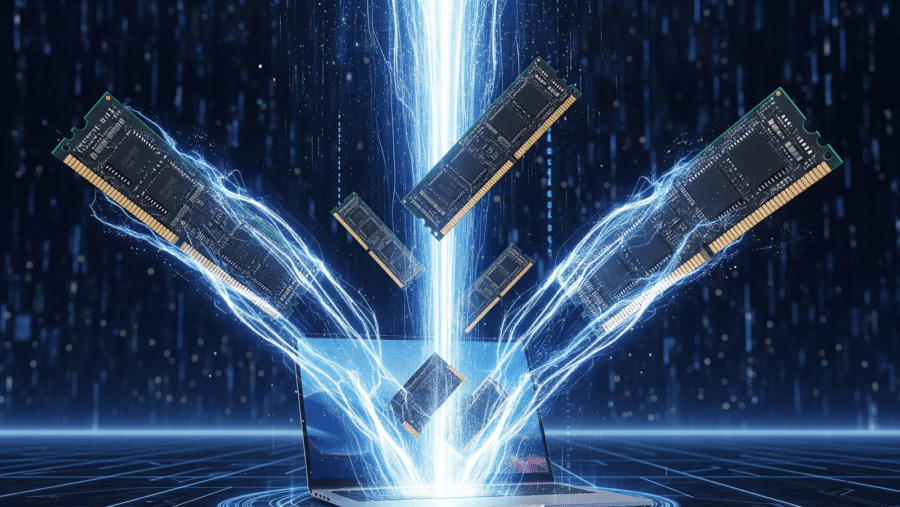
Upgrading RAM and SSD is the most effective way to boost laptop performance, especially for users who feel their device is starting to slow down or become unresponsive. If you want to speed up your laptop without replacing the entire device, this article will guide you comprehensively on how to upgrade RAM and SSD, the benefits you can reap, and tips for choosing compatible components in the Indonesian market.
🔍 Why Upgrade RAM and SSD?
Before diving into the technical steps, let’s discuss why upgrading RAM and SSD is important:
Benefits of Upgrading RAM:
- Improved multitasking capabilities (running many applications simultaneously).
- Faster video/photo rendering processes.
- Reduced lag when running games or demanding software.
Benefits of Upgrading SSD:
- Faster booting (laptop powers on in seconds).
- Much faster file and application access compared to HDD.
- Better durability due to no mechanical parts.
✅ The combination of RAM + SSD upgrade provides a significant performance boost, especially if your laptop is still using an HDD and has < 8GB RAM.
🧰 Preparation Before Upgrading
Before you start the upgrade, make sure you have the following ready:
- Small screwdriver (usually PH0 and PH1).
- Anti-static wrist strap or anti-static mat (if available).
- Small vacuum cleaner or soft brush.
- New components: RAM and SSD according to your laptop’s specifications.
- Laptop user manual or online guide from the manufacturer.
- Backup important data (especially if replacing the main drive).
🔧 Steps for Upgrading RAM
Step 1: Check Laptop Specifications
Ensure you know the type of RAM your laptop uses:
- DDR3 or DDR4?
- What is its maximum frequency (e.g., 2400MHz)?
- Does it support dual-channel?
- How many RAM slots are available?
🔍 Tips: Visit the official laptop manufacturer’s website (e.g., ASUS, Lenovo, Dell), or use tools like Crucial System Scanner.
Step 2: Purchase Compatible RAM
Some recommended popular RAM brands in Indonesia:
- Corsair
- Kingston
- TeamGroup
- V-Gen
- ADATA
📌 Important: Ensure the RAM size and type match your laptop’s motherboard.
Step 3: Shut Down Laptop and Remove Battery (If Possible)
- Shut down the laptop completely.
- Unplug the charger.
- If the battery is removable, remove it for safety.
Step 4: Open the Laptop’s Bottom Cover
Use the appropriate size screwdriver to open the laptop’s bottom casing. There’s usually a specific panel for RAM and SSD access.
Step 5: Install New RAM
- Press the clips on both sides of the RAM slot to open them.
- Hold the RAM with both hands, paying attention to the notch (small protrusion) for proper alignment.
- Insert the RAM into the slot perpendicularly, pressing gently until the clips automatically lock it in place.
Step 6: Close Up and Power On the Laptop
- Reattach the casing cover.
- Reconnect the battery and charger.
- Power on the laptop and check if the RAM is detected.
🔧 Check via Windows:
- Press Ctrl + Shift + Esc to open Task Manager.
- Go to the “Performance” tab → view the total detected RAM.
💾 Steps for Upgrading SSD
Step 1: Check Supported SSD Type
Laptops typically support two types of SSDs:
- SATA SSD (box-shaped like a hard drive, uses SATA cables)
- NVMe M.2 SSD (small card-shaped, plugs directly into an M.2 slot)
🔍 Tips: Use applications like CrystalDiskInfo or HWiNFO to check the installed SSD type.
Step 2: Purchase the Right SSD
Recommended SSD brands in Indonesia:
- Samsung (EVO 870, 980 Pro)
- Western Digital (SN570, SN550)
- ADATA (SX8200 Pro)
- Lexar, TeamGroup, Kingston
📌 Important: Consider capacity: a minimum of 256GB for the operating system and basic applications, 512GB–1TB for larger storage needs.
Step 3: Clone Old Data (Optional)
If you want to migrate your old operating system and data:
- Use cloning software like Macrium Reflect Free or Acronis True Image.
- Connect the new SSD to the laptop using a USB-to-M.2 adapter or enclosure.
Step 4: Open the Laptop’s Bottom Cover
Similar to the RAM upgrade, open the back casing to access the SSD slot.
Step 5: Remove Old SSD/HDD (If Replacing)
- If using an HDD or SATA SSD, disconnect the SATA data and power cables and screws.
- If using NVMe M.2, simply remove the retaining screw.
Step 6: Install New SSD
- For SATA: Install the new SSD, connect the SATA data and power cables.
- For NVMe: Insert the SSD into the M.2 slot, then secure it with a screw (if none is present, use the screw from the old SSD).
Step 7: Reassemble and Power On the Laptop
- Close the casing.
- Power on the laptop.
- If cloning has been performed, the laptop will boot directly from the new SSD.
🔧 If you haven’t reinstalled the OS:
- Enter BIOS/UEFI (press F2, Del, or Esc during startup).
- Set the boot order so the new SSD is the first priority.
💡 Tips for Choosing RAM and SSD in the Indonesian Market
1. Ensure Official Warranty
Choose products with an official warranty (minimum 3 years) to avoid the risk of damage after purchase.
2. Look for Reputable Distributors
Purchase from well-known electronics stores such as:
- Bhinneka.com
- JD.ID
- Lazada
- Tokopedia
- Eratsquare
- Trusted local PC distributors
3. Compare Prices and Capacities
Example RAM and SSD prices in Indonesia (as of April 2025):
| Type | Capacity | Price Range |
|---|---|---|
| DDR4 RAM | 8GB | Rp300,000 – Rp400,000 |
| DDR4 RAM | 16GB | Rp500,000 – Rp700,000 |
| SATA SSD | 256GB | Rp350,000 – Rp500,000 |
| NVMe SSD | 512GB | Rp600,000 – Rp900,000 |
4. Consider Performance vs. Budget
- For office and browsing needs: 8GB RAM + 256GB SSD is sufficient.
- For gaming or editing: 16GB RAM + 512GB–1TB SSD is highly ideal.
📌 Repiw’s Conclusion
Upgrading RAM and SSD is the best investment to extend your laptop’s lifespan. With the steps above, you can do it yourself without needing to take it to a service center. Moreover, by choosing the right components and considering compatibility, you can enjoy much faster and more stable laptop performance.
💡 Pro Tip: If you’re hesitant to do it yourself, visit a local computer store that offers free installation services when purchasing RAM/SSD.
🔍 SEO Keywords for This Article:
- How to upgrade laptop RAM
- Laptop SSD replacement tutorial
- RAM and SSD upgrade guide
- Tips for choosing compatible RAM and SSD
- Affordable laptop upgrade in Indonesia
- How to improve laptop performance
- Upgrade RAM DDR3 to DDR4
- SSD NVMe vs SATA
Article Tags: #RAMUpgrade #SSDLaptop #TechTips #LaptopPerformance #HardwareIndonesia #UpgradePC
This article is intended for repiw.com readers with beginner to intermediate knowledge. Always ensure you read your laptop’s manual before performing any hardware upgrades or modifications.