How AI is Helping Indonesia’s Healthcare Sector?
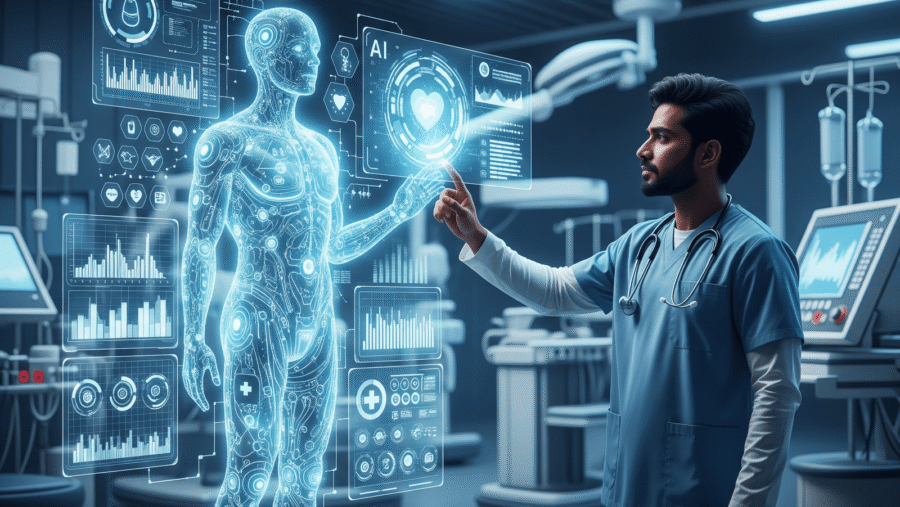
Indonesia’s healthcare sector is rapidly advancing, and artificial intelligence (AI) is playing a crucial role in this transformation. From aiding more accurate disease diagnoses to simplifying access to doctor consultations, AI offers innovative solutions for various challenges within the health sector. Let’s delve deeper into how AI is revolutionizing healthcare in Indonesia.
Automated Diagnosis: Accelerating and Enhancing Accuracy
One of AI’s most promising applications is in disease diagnosis. AI algorithms, trained on millions of medical data points such as radiological images (X-rays, CT scans, MRIs) and lab results, can detect anomalies that might be missed by the human eye.
- Early Cancer Detection: AI can detect lung cancer from CT scan results with high accuracy, even in early stages that are difficult to identify. This enables patients to receive faster treatment and increases their chances of recovery.
- Retinal Image Analysis: AI is used to diagnose eye diseases such as diabetic retinopathy, glaucoma, and macular degeneration by merely analyzing retinal images. This is particularly helpful in remote areas with limited access to ophthalmologists.
- Infectious Disease Identification: AI can analyze patient data, such as symptoms and test results, to predict the likelihood of infectious diseases like COVID-19 or dengue fever more quickly and accurately.
AI Doctor Consultation Apps: Facilitating Healthcare Access
AI-powered doctor consultation applications are gaining popularity in Indonesia. These apps utilize AI-backed chatbots or virtual assistants to provide basic health information, answer common questions, and offer first-aid recommendations.
- Triage and Medical Advice: Patients can input their symptoms, and AI will provide medical advice based on that information. This helps patients determine whether they need immediate medical attention or can manage their condition at home.
- Medication Reminders: AI can send reminders to take medication regularly, helping patients adhere to their treatment schedules and enhancing therapeutic effectiveness.
- Reliable Health Information: AI applications can provide accurate and trustworthy health information, helping patients understand their conditions and make more informed decisions about their health.
Medical Data Analysis: Boosting Healthcare Service Efficiency and Effectiveness
AI also plays a crucial role in medical data analysis, assisting healthcare providers in making better decisions and improving operational efficiency.
- Disease Outbreak Prediction: AI can analyze epidemiological data, such as disease cases, demographic information, and environmental factors, to predict potential disease outbreaks. This enables governments and healthcare providers to take timely preventative measures.
- Hospital Management Optimization: AI can help optimize the allocation of hospital resources, such as beds, medical staff, and equipment, to improve efficiency and reduce patient waiting times.
- Personalized Treatment: AI can analyze patients’ genetic and clinical data to predict their responses to various types of treatments. This allows doctors to prescribe more personalized and effective medications.
Future Challenges and Opportunities
While AI offers numerous benefits for Indonesia’s healthcare sector, several challenges still need to be addressed.
- Data Privacy and Security: It’s crucial to ensure that patient medical data is securely protected and their privacy is respected.
- Algorithmic Bias: AI algorithms can inadvertently contain biases, which may lead to unfair or inaccurate results.
- Lack of Infrastructure: AI implementation requires adequate infrastructure, such as stable internet connectivity and access to high-quality medical data.
However, by addressing these challenges, Indonesia can maximize AI’s potential to improve the quality and accessibility of healthcare services for all its citizens. In the future, we can anticipate more advanced AI developments, such as precision surgical robots, AI-accelerated drug discovery, and deeper treatment personalization. With continuous innovation, AI will continue to revolutionize Indonesia’s healthcare sector and help create a healthier society.