AI in Education: Making Learning More Effective and Engaging
The world of education continues to evolve alongside technological advancements. One promising innovation is the application of Artificial Intelligence (AI). AI is no longer merely a futuristic concept; it has become an integral part of enhancing the quality of learning, even here in Indonesia.
AI in Indonesian Education: More Than Just Technology
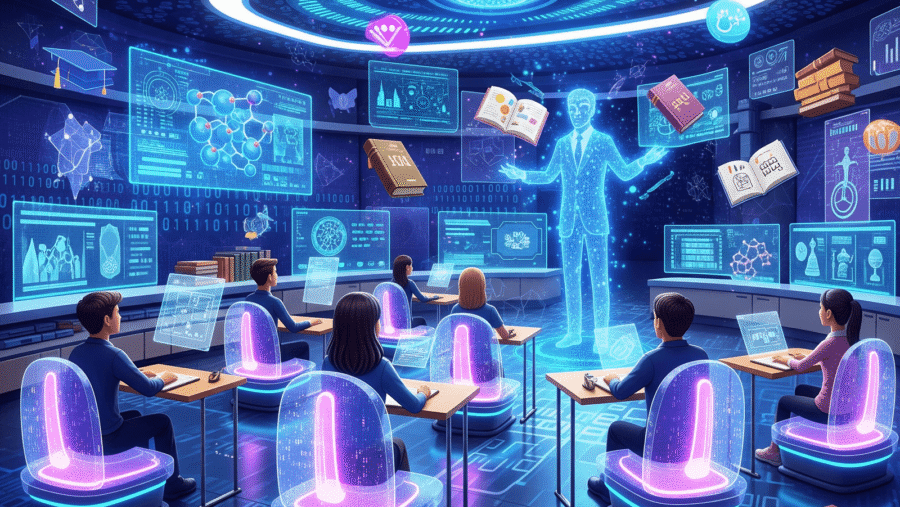
The implementation of AI in Indonesian education offers various opportunities to create more effective, personalized, and engaging learning experiences. Here are some concrete examples:
- Personalized Learning: One of AI’s core strengths is its ability to personalize the learning experience. Imagine a student struggling with a particular math concept. With AI’s help, learning platforms can identify that student’s weaknesses and provide supplementary learning materials, relevant practice questions, and even virtual tutors tailored to their specific learning style. This adaptive system ensures every student receives the attention needed to reach their full potential. For instance, several learning apps already use AI algorithms to adjust question difficulty based on student performance.
- More Advanced Plagiarism Detection: Plagiarism is a serious issue in academia. AI offers a more sophisticated solution compared to traditional plagiarism detection software. AI algorithms can analyze text more deeply, detecting improper paraphrasing and even identifying hidden sources across the internet. This empowers teachers and lecturers to uphold academic integrity and encourages students to produce original work.
- Interactive Virtual Classrooms: The COVID-19 pandemic accelerated the adoption of remote learning. AI can significantly enhance the virtual classroom experience, making it more interactive and captivating. For example, AI can be used to analyze students’ facial expressions, identifying signs of confusion or disengagement. Teachers can then adjust their teaching methods in real-time to ensure all students are involved and comprehend the material. Additionally, AI-powered chatbots can answer student questions instantly, provide immediate feedback, and facilitate group discussions.
- Virtual Teaching Assistants: AI can alleviate teachers’ workloads by providing virtual assistants capable of handling administrative tasks such as grading assignments, scheduling, and communicating with parents. This frees up educators to focus on more crucial aspects, like giving individual attention to students and designing creative learning activities.
- Data Analysis for Curriculum Improvement: AI can analyze student performance data to identify trends and patterns that can be leveraged to improve curricula and teaching methods. For instance, if AI consistently finds that students struggle with a specific topic, teachers and curriculum developers can adjust the learning materials to make them more accessible and easier to understand.
Advantages of AI Implementation in Education:
The implementation of AI in education offers a multitude of advantages, including:
- Increased Learning Effectiveness: Personalized learning and instant feedback help students learn more effectively and achieve better academic outcomes.
- Enhanced Educational Accessibility: AI-powered remote learning enables students in remote areas and those with special needs to access quality education.
- Improved Student Engagement: Interactive virtual classrooms and AI-powered chatbots make learning more engaging and enjoyable for students.
- Increased Teacher Efficiency: Virtual teaching assistants liberate teachers from administrative burdens, allowing them to focus on instruction.
- Better Decision-Making: Data analysis assists teachers and curriculum developers in making more informed decisions based on empirical evidence.
Challenges and Considerations:
While offering numerous benefits, the implementation of AI in education also faces several challenges. One significant hurdle is the digital divide. Not all students have access to the necessary devices and internet connections to fully leverage AI technology. Furthermore, it’s crucial to ensure that student data is protected and used ethically. Comprehensive teacher training is also essential for them to effectively utilize AI technology.
Review Conclusion
AI holds immense potential to transform education in Indonesia. With proper implementation and careful consideration, AI can help create more effective, personalized, and enjoyable learning experiences for all students. It’s imperative for regulators, teachers, and students to collaborate in leveraging this technology responsibly, ensuring AI is used for continuous improvement in educational quality. Investment in digital infrastructure, teacher training, and the development of relevant curricula will be key to the successful implementation of AI in Indonesian education. The future of education is in our hands; let’s harness AI to make it a reality.